


Why Data Integration Is Now the Core of Retail Strategy
Retailers and FMCG manufacturers have never had access to so much data, field visits, retailer portals, CRM systems, e‑commerce analytics, supply chain signals, and competitive intelligence. Yet most organizations still struggle to turn this abundance into real impact. Data arrives late, in different formats, and often without the context needed to make confident decisions.
This is why data integration has become the new foundation of retail performance.
Not dashboards. Not AI.
Integration. Freshness. Actionability.
Because strategy only works when it is connected to what truly happens in stores, and store reality changes every single day.
Why Retail Needs Integrated, Fresh, Actionable Data
The Strategic Importance of Data Integration
Retail has shifted from a world of quarterly reviews to a world of daily decisions. A promotion that underperforms on Monday must be corrected by Tuesday. A shelf gap spotted in the morning should be fixed before noon. A pricing inconsistency can impact an entire category’s performance in a matter of hours.
In this environment, fragmented data slows everything down. Teams spend more time reconciling numbers than acting on them. AI models underperform because they are fed inconsistent inputs. And leadership teams struggle to align strategy with execution because they are not looking at the same truth.
Data integration solves this by creating a single, reliable, real‑time foundation for every decision, from HQ to the field.
The Current Reality: Fragmented, Slow, and Costly
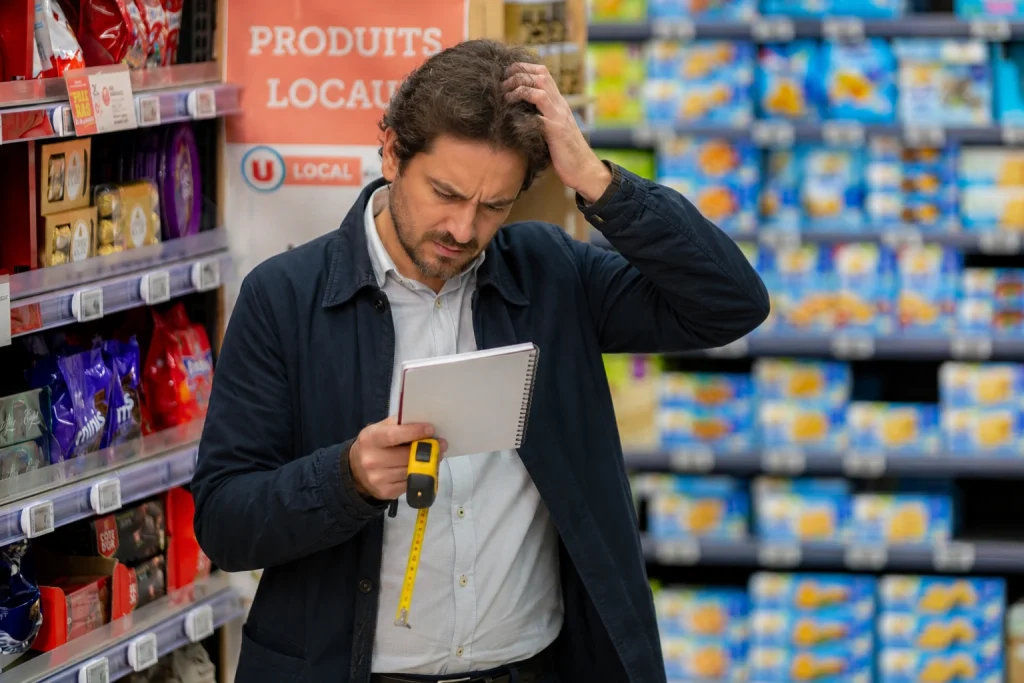
Despite years of digitalization, most retail organizations still operate with siloed tools and disconnected workflows. Sales teams track store visits in one system, category managers analyze performance in another, and marketing teams rely on retailer data that rarely matches internal KPIs.
This fragmentation creates blind spots. A shelf gap might be visible in the field but invisible in the reporting. A promotion might be compliant in one region and completely off‑track in another, with no unified view to detect it. And because data often arrives days or weeks after the fact, teams end up reacting to problems long after the opportunity to fix them has passed.
The result is a costly disconnect between strategy and execution, a gap that grows wider every time data is delayed or inconsistent.
What Data Integration Really Means in Retail
Data integration is often misunderstood as “putting everything in one dashboard.” In reality, it is much deeper. It means building a single source of truth where every data point, from field photos to retailer feeds, is harmonized, validated, and connected to the same taxonomy.
It means that a SKU is always recognized the same way, that KPIs follow the same definitions across teams, and that insights flow seamlessly from one system to another. Most importantly, it means that data is not only centralized but activated: it fuels workflows, triggers alerts, and supports decisions in real time.
Integration is not a reporting exercise. It is an operational capability.
The Fresh Data Imperative
Even the best integration loses its value if the data is outdated. In retail, freshness is everything. A shelf gap detected three days late is a lost sale. A pricing error discovered at the end of the week is a missed negotiation. A category insight based on last month’s data is irrelevant.
Fresh, up‑to‑date data changes the game. It allows teams to correct issues immediately, align HQ strategy with field reality, and anticipate risks before they escalate. It also unlocks the true potential of AI, which depends entirely on the quality and timeliness of the data it receives.
In today’s retail landscape, fresh data is a competitive advantage, and data integration is what makes freshness possible at scale.
How Integrated Data Transforms Retail Execution
What Makes a Strong Data Integration Strategy?
A robust data integration strategy starts with a unified data model that ensures every team speaks the same language. It requires automated ingestion pipelines capable of capturing data from the field, retailers, and market sources without manual intervention. AI plays a crucial role in cleaning, enriching, and structuring this data so that it becomes reliable and comparable across regions and categories.
Interoperability is essential. Integrated data must flow into CRM systems, SFA tools, BI platforms, and operational dashboards. And because retail is dynamic, governance and quality monitoring ensure that the data remains accurate, complete, and fresh over time.
The Business Impact: How Integration Transforms Decisions
Integrated data shifts organizations from reacting to yesterday’s issues to acting on today’s reality:
- Decisions become faster because teams no longer waste time reconciling conflicting numbers.
- Store visits become more strategic because field teams know exactly where to focus.
- Negotiations with retailers become stronger because KPIs are consistent and traceable.
Integrated data also unlocks predictive capabilities. Instead of discovering issues after they happen, teams can anticipate risks, from out‑of‑stocks to promo failures, and act before they impact sales.
Most importantly, integrated data creates alignment: HQ defines the strategy, the field executes it, and both operate on the same truth.
Use Cases Enabled by Integrated Data
With a unified data foundation, retail organizations can activate high-value use cases that were previously impossible to scale.
- Real‑time OSA monitoring becomes a daily operational tool rather than a monthly report.
- Perfect store programs gain consistency across regions.
- Promo and pricing compliance can be tracked continuously instead of retrospectively.
- Category teams gain a clearer view of competitive dynamics
- Sales teams receive actionable insights that guide their store visits.
- Predictive alerts help prevent issues before they occur
- Automated reporting frees teams from manual tasks so they can focus on execution.
EasyPicky: The Retail Data Integration Ecosystem
Capturing Fresh, Reliable Data in the Field
EasyPicky starts where retail performance begins: in the store. Our video‑based recognition technology captures shelf reality instantly and accurately, without the friction of manual photo capture or form filling. Every visit becomes a source of structured, reliable, real-time data.
Because the data is synced immediately, HQ teams gain visibility into store conditions as they happen, not days or weeks later. Field teams also receive tasks and next best actions, ensuring that insights translate directly into execution.
Unifying All Retail Intelligence in One Platform
Beyond field data, EasyPicky’s platform centralizes retailer feeds, historical performance, and market intelligence into a single, harmonized environment. KPIs are aligned, taxonomies are consistent, and insights are enriched by AI to highlight risks, opportunities, and trends.
The platform integrates seamlessly with CRM, SFA, and BI tools, ensuring that every team, from sales to category to marketing, operates on the same source of truth. This unified view eliminates the fragmentation that slows decision‑making and weakens execution.
The Ecosystem Advantage
What makes EasyPicky unique is its ecosystem approach.
- One AI model works across all retail formats, from supermarkets to convenience stores to drugstores.
- One data flow connects the field to HQ without manual steps.
- One truth is shared across teams, markets, and partners.
This consistency is what allows organizations to scale their retail execution programs, deploy AI confidently, and maintain a high level of performance across banners and countries.
Conclusion
Data integration is no longer a technical project, it is a strategic necessity. Retailers and FMCG manufacturers who unify their data and keep it fresh gain a decisive advantage: faster decisions, stronger execution, better negotiations, and AI that finally delivers on its promise.
The future of retail belongs to organizations that can turn store reality into integrated, real‑time, actionable intelligence. And that future starts with data integration.