


Perfect Store Strategy: How to measure and improve Retail Execution
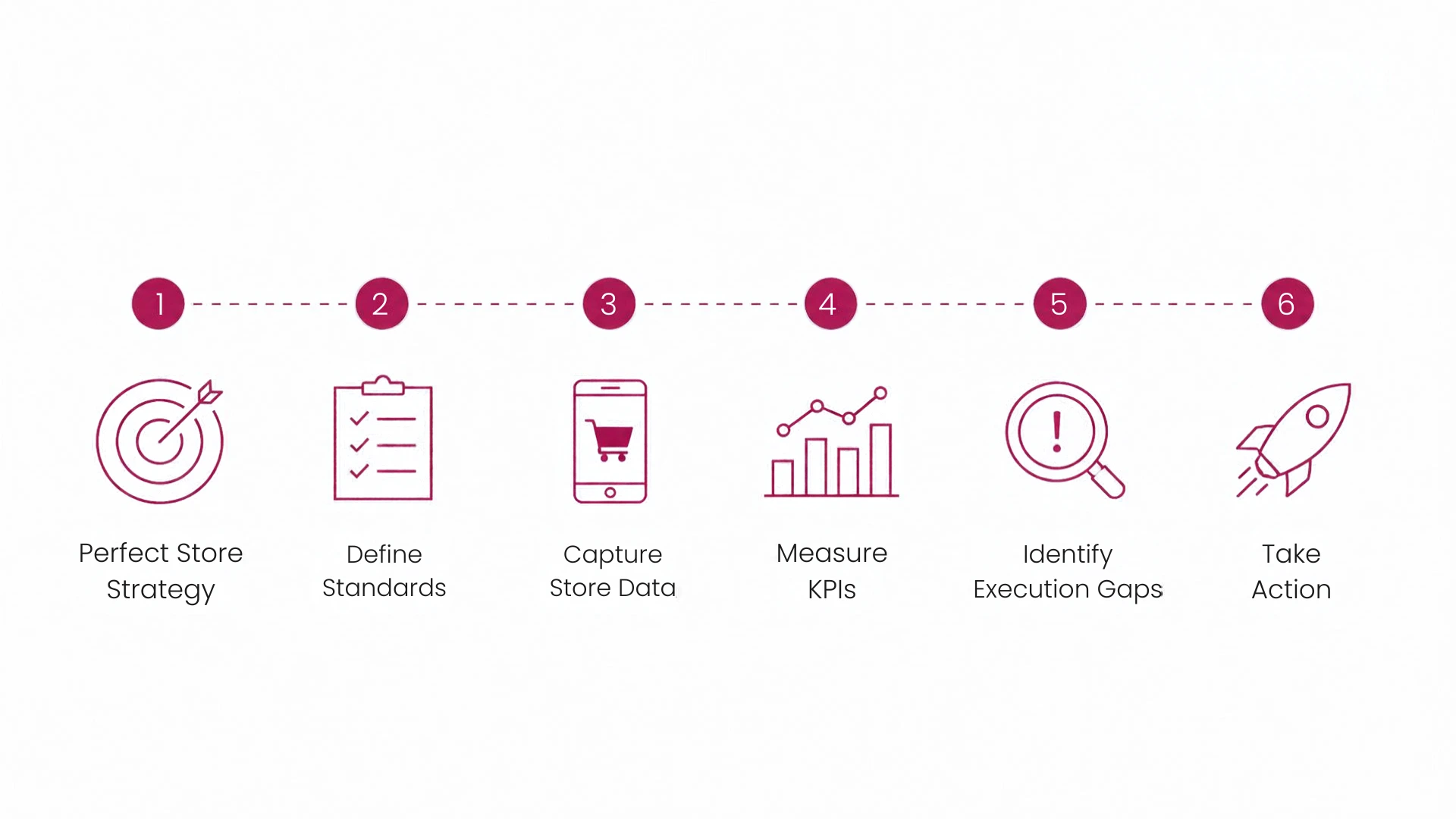
A Perfect Store strategy defines what strong in-store execution should look like, but setting standards is only the first step. To make a Perfect Store strategy effective, FMCG brands need to translate those standards into measurable indicators, collect reliable store-level data, identify execution gaps, and turn those insights into action.
For brands managing hundreds or thousands of stores, the challenge is making retail execution measurable and consistent across different retailers, regions, teams, and store formats.
This article explains how to build a measurable Perfect Store strategy, which dimensions to track, how to assess execution at store level, and how AI-powered image recognition can help FMCG brands move from manual audits to actionable retail intelligence.
A Perfect Store strategy turns commercial priorities into measurable in-store standards. Teams can then compare actual store execution with those targets, identify gaps, prioritize corrective actions, and re-measure performance over time.
1 What Is a Perfect Store Strategy?
A Perfect Store strategy is a framework that defines the conditions a brand wants to achieve in-store to maximize product availability, visibility, placement, and execution quality.
Depending on the brand and category, these standards can cover:
- Priority products being available on shelf
- Minimum facings or share of shelf
- Correct product positioning
- Planogram compliance
- Price accuracy
- Promotional displays
- Point-of-sale materials
- Other merchandising requirements
The objective is to turn commercial priorities into clear, measurable standards that field teams can execute and commercial teams can monitor.
A Perfect Store strategy therefore creates a reference point: it defines what “good execution” looks like. Retail execution data then shows how closely each store, region, retailer, or sales team is meeting those standards.
This distinction is important. A Perfect Store strategy is not simply a checklist of merchandising requirements. It is a way of connecting commercial objectives with measurable in-store execution.
2 What should a Perfect Store Strategy measure?
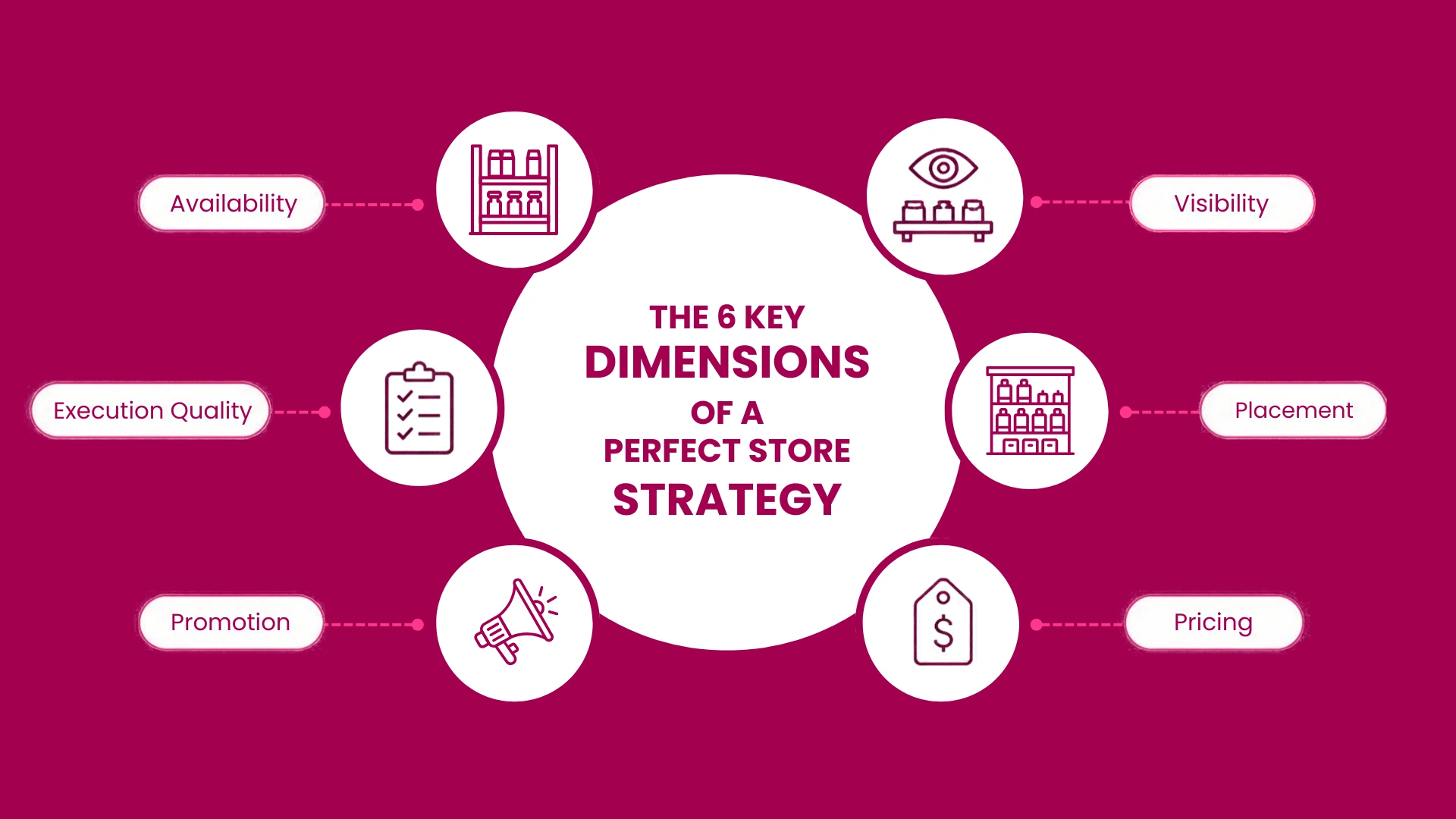
The right measurements depend on the brand's category, commercial priorities, retailers, and store formats. A Perfect Store strategy may include several dimensions of execution.
| Dimension | Example of measurable standard |
|---|---|
| Availability | Priority SKUs are available on shelf |
| Visibility | Priority products meet a minimum number of facings |
| Placement | Products are positioned according to the agreed planogram |
| Pricing | Shelf price matches the expected price |
| Promotion | Promotional displays are correctly implemented |
| Execution quality | Store meets predefined merchandising guidelines |
These are examples rather than an exhaustive list. The most relevant standards should reflect what has the greatest impact on the brand's commercial objectives.
For example, instead of setting a broad objective such as “Improve shelf visibility,” a brand could define a measurable standard: Priority SKU X must have at least four facings in the main shelf.
This makes the objective easier to communicate, measure, compare, and improve.
3 How do you measure Perfect Store Execution?
Measuring Perfect Store execution means comparing what should happen in-store with what actually happens.
A practical measurement process can be broken down into five steps.
1. Define the Perfect Store standard
Start by translating commercial objectives into specific, measurable targets.
For example:
- Priority SKU availability: 100%
- Minimum facings: 4
- Planogram compliance: ≥95%
- Promotional display compliance: ≥90%
The exact targets will vary depending on the brand, retailer, category, and commercial strategy.
2. Select the right indicators
Not every available metric needs to become part of the Perfect Store strategy.
Focus on the indicators that help answer a clear business question. For example:
- Are priority products available?
- Are they visible enough?
- Are they correctly positioned?
- Are promotions implemented as planned?
- Are stores meeting the brand's merchandising standards?
A smaller number of meaningful indicators can be more actionable than a large collection of disconnected metrics.
3. Collect store-level data
The next step is to capture what is actually happening in stores.
Depending on the organisation, this data can come from:
- Field audits
- Sales force applications
- Retailer data
- Manual observations
- Shelf images or videos
- AI-powered image recognition
The key is to collect data in a way that is consistent enough to compare execution across stores and over time.
4. Compare actual execution with the target
Once the data has been collected, brands can compare actual performance with their Perfect Store standards.
For example:
| Indicator | Target | Actual | Gap |
|---|---|---|---|
| Priority SKU presence | 100% | 94% | -6 pts |
| Minimum facings | 4 | 3.2 | -0.8 |
| Planogram compliance | 95% | 88% | -7 pts |
| Promotional display compliance | 90% | 78% | -12 pts |
This comparison makes execution gaps visible at store level rather than hiding them within an overall average.
5. Prioritize corrective actions
Measurement only creates value when it leads to action.
Teams can prioritize gaps based on factors such as:
- Product priority
- Size of the execution gap
- Number of affected stores
- Retailer or region
- Promotion period
- Commercial importance
For example, a 12-point gap in promotional compliance during a major campaign may require more immediate attention than a smaller gap on a lower-priority product.
The objective is therefore not simply to know how well stores are executing, but to understand where execution is falling short and what needs to happen next.
4 What is a Perfect Store Score?
A Perfect Store Score is a composite indicator that summarizes how closely a store meets the standards defined by a Perfect Store strategy.
For example:
| Dimension | Performance |
|---|---|
| Availability | 94% |
| Visibility | 82% |
| Pricing | 96% |
| Promotion | 78% |
| Execution quality | 85% |
| Perfect Store Score | 87% |
The exact calculation should reflect the priorities of the brand. Some dimensions may carry more weight than others depending on the commercial strategy.
A Perfect Store Score can make it easier to compare stores, regions, retailers, or periods. However, the score should not replace the underlying data.
The score tells you where performance stands. The underlying data helps explain why.
This distinction matters when teams need to move from measurement to corrective action.
5 How can technology improve Perfect Store Execution?
Traditional store audits can provide valuable information, but they often rely on manual observations, counting, photography, and data entry. At scale, this can make execution measurement time-consuming and introduce inconsistencies between stores, field teams, or reporting periods.
Technology can help make this process more consistent by automating part of the data collection and analysis.
From shelf images to actionable retail insights
AI-powered image recognition can analyse shelf videos and turn visual information into structured retail data.
With EasyPicky, field teams capture the shelf with a simple video using a smartphone or tablet. The app works offline, allowing them to access retail execution insights directly in-store and use them to complete their audits before leaving the shelf.
The workflow is simple:
The app can identify products and shelf elements such as facings, prices, and point-of-sale materials, while automatically generating retail execution indicators.

From store execution to headquarters insights
Once the audit is completed, the data is automatically synchronized with the platform. Headquarters can then access structured store-level data to monitor execution, identify recurring gaps, compare performance, and support decision-making.
This creates a continuous connection between field execution and management:
With , EasyPicky can generate indicators such as numeric distribution, out-of-stocks, share of shelf, Perfect Store Score, and other custom KPIs.
The data can then be consolidated in our , giving headquarter teams a broader view of retail execution across stores, regions, categories, or retailers.
Measure Perfect Store execution with real store-level data
EasyPicky helps FMCG brands capture store-level data, generate retail execution KPIs, identify execution gaps, and connect field reality with management insights.
Request a Demo6 How can Perfect Store data drive continuous improvement?
A Perfect Store strategy should not be treated as a one-time checklist.
Retail conditions change continuously: product ranges evolve, promotions change, retailers introduce new requirements, and commercial priorities shift. The standards themselves may therefore need to evolve over time.
This is where continuous measurement becomes important.
A practical improvement cycle is:
For example, a brand may identify that priority SKU availability is consistently below target in a specific group of stores. Instead of simply reporting the gap, the team can investigate where the issue occurs, identify the affected stores, prioritize corrective actions, and measure execution again during the following visit.
Over time, this creates a feedback loop between strategy and execution.
Store-level data can help brands:
- Identify recurring execution issues
- Compare performance across retailers or regions
- Adjust field priorities
- Evaluate the impact of commercial initiatives
- Refine Perfect Store standards
- Focus field teams on the actions that matter most
The result is a Perfect Store strategy that evolves based on what is actually happening in stores, rather than relying only on predefined assumptions.
For examples of how brands use our technology to improve retail execution, explore our .
7 Frequently Asked Questions About Perfect Store Strategy
What is a Perfect Store strategy?
How do you measure Perfect Store execution?
What is a Perfect Store Score?
How can AI improve Perfect Store execution?
8 Measure Your Perfect Store Execution With EasyPicky
A Perfect Store strategy is only as effective as the data used to measure it.
EasyPicky helps FMCG brands capture store-level data, generate retail execution KPIs, identify execution gaps, and connect field reality with management insights.
Want to see how AI-powered image recognition can support your Perfect Store strategy?
Turn shelf data into actionable retail intelligence
Request a personalized demo and discover how EasyPicky can turn shelf data into actionable retail intelligence.
Request a Demo