


Fear of Change in Retail Execution: Understanding, Managing, and Overcoming It

Retail and CPG teams operate in an environment that evolves at high speed: new expectations from retailers, new KPIs, new technologies, and new ways of working. Yet despite this constant movement, adopting new tools or methods often feels slow and difficult. Not because people resist progress, but because change is uncomfortable. It disrupts habits, challenges routines, and introduces uncertainty.
Recognizing this fear instead of ignoring it is the first step toward building smoother, more successful transformations. In retail execution, this matters even more because technology must work within the operational reality of field sales teams, managers, and decision-makers.
Fear of change in retail execution is usually a fear of operational risk, not a rejection of technology. Adoption improves when the new solution is simple, fits existing workflows, produces visible quick wins, and gives both field teams and leadership confidence in the transition.
1 Understanding Fear of Change in Retail & CPG
1.1 Why Change Triggers Resistance
For many teams, routine equals safety. A familiar process, even if imperfect, is predictable. A new tool, on the other hand, raises questions: Will it slow me down? Will this reduce my autonomy? Will I look less competent?
Fear of change is rarely about the technology itself. It is about the perceived risk behind it: the fear of losing efficiency, mastery, or autonomy.
The Kübler-Ross Change Curve can help visualize how those emotions evolve. What begins as resistance can gradually turn into exploration and, eventually, confidence. Understanding this journey helps leaders support teams through change with empathy rather than pressure.
The curve also highlights something essential: resistance is not a sign of rejection — it is a normal emotional response to uncertainty. These stages are not obstacles to avoid but signals that people are processing the shift. As teams start experimenting with the new tool, the emotional tone changes. Curiosity replaces fear. Small wins build trust. Once people see that the new solution genuinely makes their work easier, they move toward integration, where the new way of working becomes the new normal.
By recognizing these phases, leaders can anticipate where friction will appear, respond with the right support at the right moment, and create the conditions for smoother, more confident adoption.
1.2 How Fear of Change Shows Up in the Field
On the ground, this fear is amplified. Field teams work under pressure: limited time in store, tight routes, and ambitious targets. Anything new can feel like an obstacle rather than an improvement. This is where you hear the classic “We’ve always done it this way”, or see hesitation rooted in past experiences with tools that were slow, inaccurate, or abandoned after a few months.
Learning something new can feel like extra work, and decisions made far from the field can create mistrust. In short, the fear is not irrational: it is shaped by very real operational constraints and past experiences.

This is why modern field retail execution tools have to reduce, rather than add, friction during the store visit. The technology only creates value when it helps reps capture information faster and act while they are still in front of the shelf.
1.3 The Stakes of Change for Decision-Makers
Higher up in the organization, fear of change takes a different form. Leaders worry less about learning curves and more about consequences. A transformation that fails does not just waste time: it affects budgets, teams, and credibility.
Decision-makers do not fear the tool itself; they fear the ripple effects of a transformation that does not land.
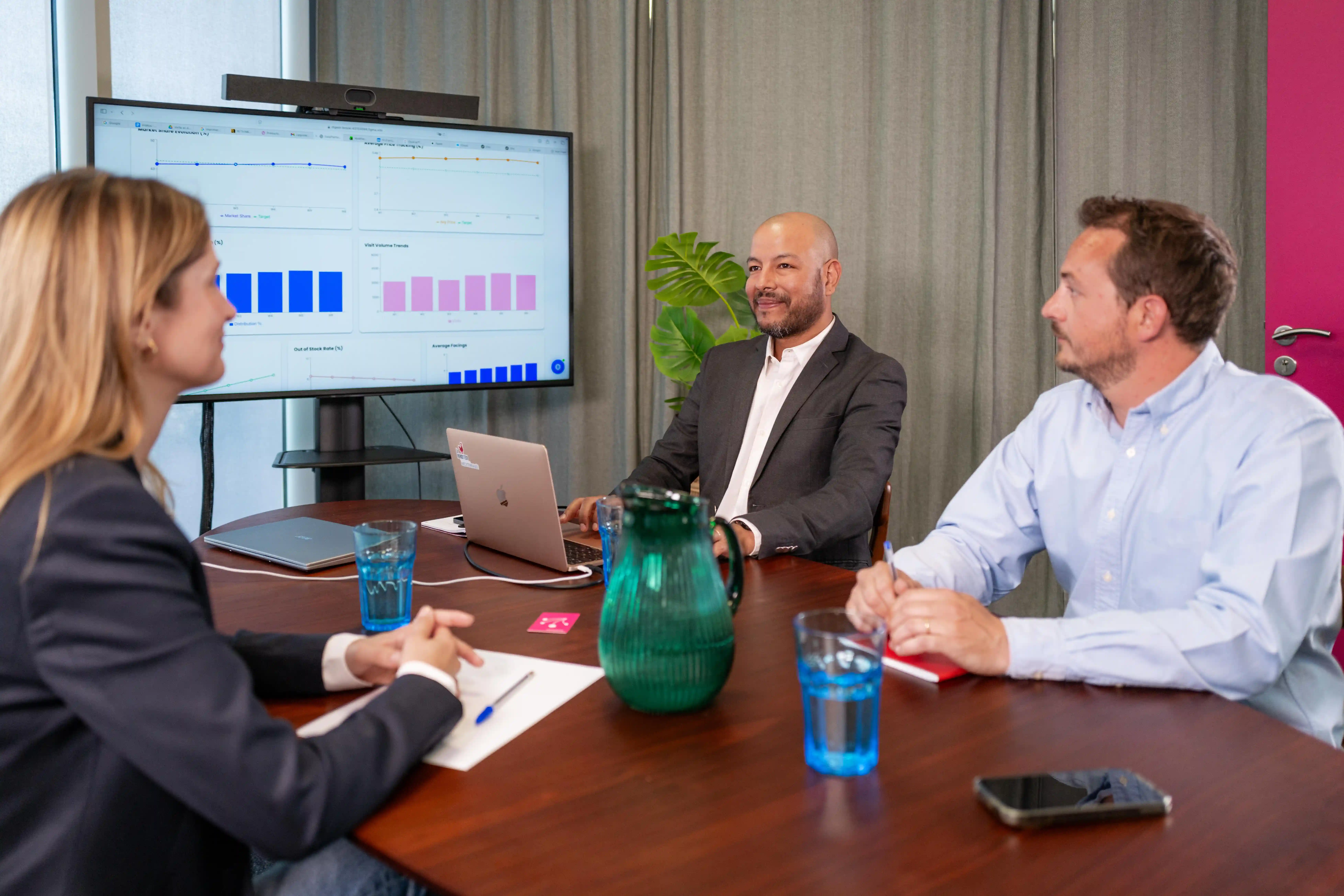
Make change easier to adopt in the field
See how EasyPicky turns shelf capture into instant, actionable retail data while fitting into existing workflows.
Request a Demo2 The Real Cost of Not Changing
2.1 Operational Cost
Sticking to old methods has a price. Manual checks, double entry, long reporting cycles, and fragmented workflows slow down execution. Field teams spend time on low-value tasks instead of focusing on what matters: selling, negotiating, and improving in-store presence.
Reducing this administrative burden is one of the clearest ways to improve the ROI of store execution: the more time teams can redirect from data collection to action, the more valuable each visit becomes.
2.2 Data Cost
When processes remain manual or inconsistent, data becomes unreliable. It arrives late, incomplete, or subjective. This weakens decision-making and creates blind spots. Without trustworthy data, even the best strategies lose their impact.
A centralized retail data platform helps teams consolidate field information, standardize KPIs, and make retail data easier to compare and activate across the organization.
2.3 Strategic Cost
A company that cannot rely on fast, accurate data struggles to align strategy with field reality. Issues are detected too late. Competitor moves go unnoticed. Priorities become reactive instead of proactive. Strategy becomes a slide deck rather than an operational engine.
This gap between headquarters strategy and what actually happens in store is a recurring challenge in CPG. It is also why connecting strategy and field execution requires reliable, exhaustive, and actionable data.
2.4 Revenue Cost
Ultimately, the cost of not changing is financial. Poor visibility at shelf level leads to lost sales, missed promotional opportunities, inefficient merchandising investments, and slower ROI on category initiatives. In a competitive FMCG landscape, not changing often costs more than changing.
3 Creating the Conditions for Successful Change
3.1 The Foundations of Effective Adoption
Successful adoption does not happen because a tool is powerful. It happens because the conditions around the change make it feel safe, logical, and beneficial. When teams understand why the change is happening, how it fits into their daily reality, and what they stand to gain, resistance naturally decreases.
These foundations apply to any transformation — whether it is a new process, a new tool, or a new way of working. When they are in place, adoption becomes less about “managing resistance” and more about creating the right environment for people to move forward confidently.
3.2 How EasyPicky Puts These Principles Into Action
EasyPicky was designed with these adoption principles at its core. Every feature, workflow, and integration choice supports a smoother transition for field teams and leadership. The table below shows how the foundations of effective change translate into concrete EasyPicky advantages.
| What Facilitates Change | How EasyPicky Delivers It |
|---|---|
| Simplicity: change is easier when the tool is intuitive and does not require long training. | One gesture, instant analysis: sales reps film the shelf and the app analyzes it automatically, turning the shelf into usable data in seconds. |
| Continuity: teams adopt faster when the new solution fits naturally into existing workflows. | Seamless integration: EasyPicky connects with CRM, SFA, BI, and company dashboards, helping companies keep their existing processes intact. |
| Proof over promises: real results reduce fear and build trust. | Immediate wins: teams can quickly see the impact on data capture, reporting, and time spent during store visits. |
| Co-construction: involving field teams early creates ownership and reduces resistance. | Feedback loops: EasyPicky evolves with input from sales reps, managers, and category teams. |
| Quick wins: visible improvements in days help shift mindsets. | Fast impact: fewer manual steps, faster reporting, and more time available for action in store. |
| Risk reduction for leadership: decision-makers need reassurance that the change will not disrupt the organization. | Validated, scalable, low-friction: EasyPicky can be deployed without rebuilding the entire retail execution environment from scratch. |
EasyPicky’s Field App focuses on fast in-store capture and immediate action, while the Data Platform consolidates retail information for managers and decision-makers. Together, they help connect field adoption with strategic visibility.
See how EasyPicky fits your current retail workflow
A personalized demo lets you evaluate the field experience, data flow, integrations, and expected business impact with your own use cases in mind.
Request a Demo3.3 A Change That Paid Off for Mondelez Benelux
The journey of Mondelez Benelux is a strong example of what happens when a team chooses to move forward despite internal hesitation. For years, they relied on a long-established retail execution tool used across the wider organization. Proposing a switch to a different solution naturally created tension: some feared disrupting routines, others worried about the effort required to migrate, and many questioned whether a regional team should deviate from the group’s standard.
Yet the Benelux team knew they needed a solution that matched their ambitions for speed, accuracy, and smarter data usage. They pushed for change, not because it was easy, but because it was necessary.
What made the transition successful was the continuity of the process. Instead of starting from zero, EasyPicky reused and enriched the existing setup, keeping product data, hierarchies, and workflows intact. This drastically reduced the perceived risk and made the switch far smoother than expected.
Within weeks, the benefits were clear: faster shelf audits through video recognition, full offline capability, and a learning curve short enough for new users to get started quickly. Field teams gained back valuable time in store, and the quality of data improved immediately.
The cultural shift was just as significant. What began as a contested decision became a reference point within the Western Europe cluster. The team not only achieved the business benefits they had projected a year earlier; they exceeded them, showing how the right retail execution technology can unlock both operational efficiency and organizational confidence.
Discover the Mondelez Benelux success story4 Conclusion: Change Does Not Have to Be Scary
Fear of change is natural, but it does not have to be a barrier. When technology is simple, reliable, and aligned with real-world workflows, teams adopt it because it makes their job easier, not because they are told to.
EasyPicky helps companies move forward with confidence, turning retail execution into a discipline powered by instant, trustworthy, actionable data without the friction that usually comes with transformation.
Ready to make retail execution easier to adopt?
Discover how EasyPicky can support your field teams and decision-makers with a retail intelligence workflow built for speed, accuracy, and action.
Request a Demo